Malawi has called for comprehensive debt relief and restructuring to ease the debt burden undermining development and leaving government with limited resources for essential services.
Minister of Foreign Affairs and International Cooperation George Chaponda, who is representing President Peter Mutharika at the 81st United Nations General Assembly in New York, also told the assembly to provide predictable climate financing to vulnerable countries.

He said Malawi could not achieve sustainable development while struggling to service an unsustainable debt burden.
“We cannot achieve sustainable development while drowning in debt. Malawi, therefore, calls for immediate, comprehensive debt relief and restructuring,” said Chaponda.
He said the international financial system was forcing developing countries to choose between servicing debt and investing in health, education and climate resilience.
“The current international financial architecture forces developing nations to choose between servicing predatory debts and investing in health, education and climate resilience. This is a moral failure,” said the minister.
Malawi’s public debt stock stood at K23.9 trillion, equivalent to 90.9 percent of gross domestic product (GDP), as of December 2025. At K16 trillion, the country’s domestic debt accounted for 65 percent of the total debt burden.
In the current financial year ending March 31 2027, the government projects public debt interest payments at K2.7 trillion, up by 22.9 percent from the revised K2.2 trillion for the 2025/26 financial year, largely due to previously committed debt.
Chaponda also called for reforms to the International Monetary Fund (IMF) and World Bank, arguing that the current global financial architecture contributes to debt pressures facing developing countries.
“The international financial architecture, specifically the IMF and the World Bank, must be radically overhauled,” he said.
The minister also called for the full operationalisation and capitalisation of the Loss and Damage Fund, as well as predictable and accessible financing for climate adaptation and disaster-risk reduction.
On global governance, Chaponda joined calls for reform of the UN Security Council, saying its current composition does not reflect the geopolitical realities of 2026.
The minister used the address to lobby for support for Malawi’s candidate for the International Criminal Court, Justice Tujilane Chizumila, for the 2027-2036 term.
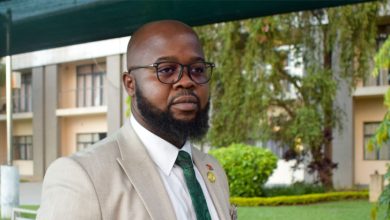
Governance and international relations expert Chimwemwe Tsitsi said the issues raised by Chaponda were relevant to Malawi, but cautioned against excessive reliance on aid and multilateral financial institutions.
On his part, Mzuzu University economist Christopher Mbukwa backed debt restructuring, saying it could create fiscal space for health, agriculture and education.
National Advocacy Platform executive director Benedicto Kondowe said Chaponda’s calls for debt relief, increased concessional financing and greater climate finance were timely given Malawi’s debt distress and limited fiscal space.
Malawi previously benefited from debt relief under the Highly Indebted Poor Countries initiative in 2006, which reduced its total public debt by nearly 70 percent.
Public debt fell from K426 billion in 2005, equivalent to 130 percent of GDP, to K131 billion, or 30 percent of GDP, after the debt cancellation.
The relief was followed by a period of stronger economic growth, which averaged seven percent between 2006 and 2011 and peaked at 9.7 percent in 2008.